Research

Multisensory Integration

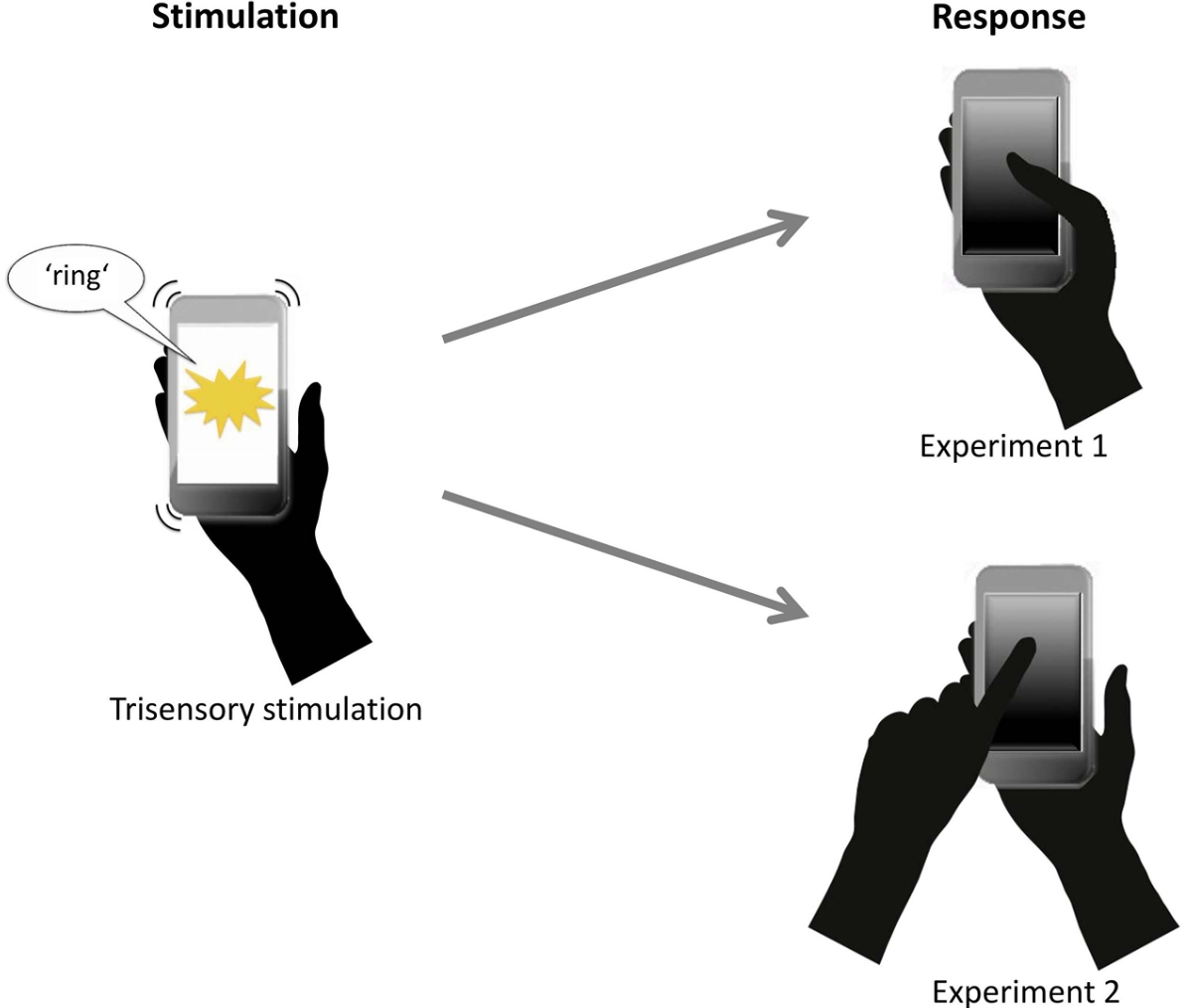
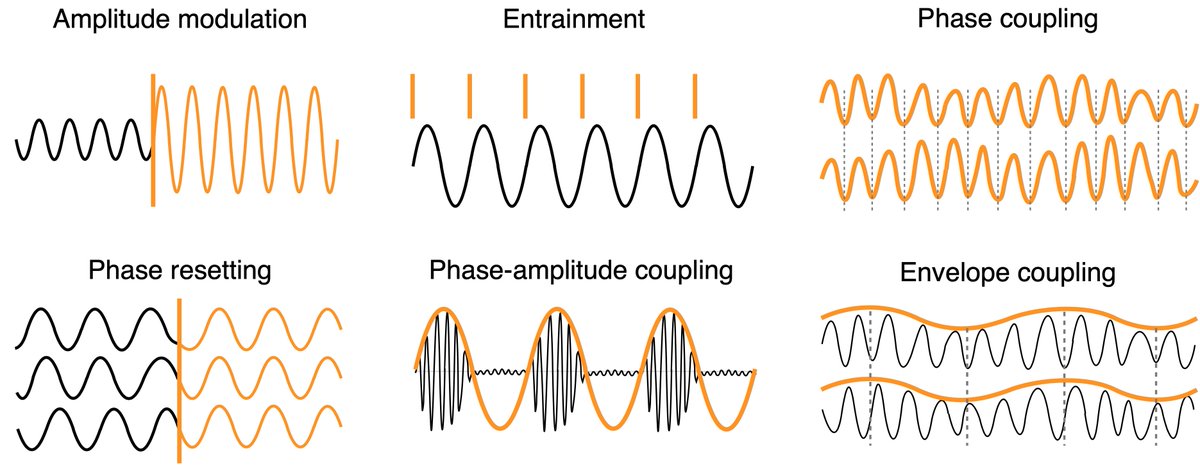
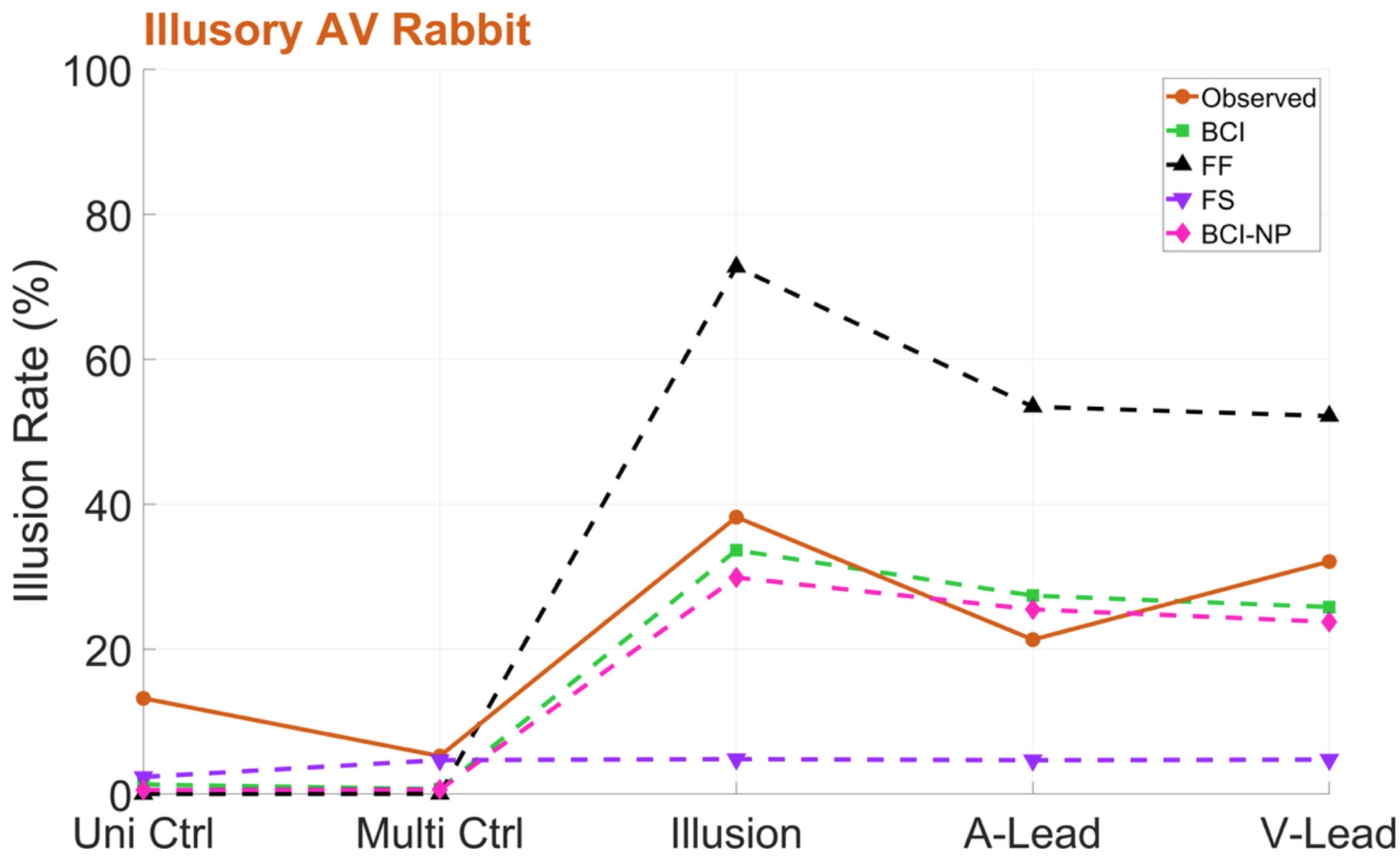
Why can we understand speech better in noisy settings when we can see the speaker’s lips? Why does food taste bland when our nose is blocked? Multisensory integration researchers investigate these and related questions. Despite decades of experimental research, the precise neural mechanisms underlying multisensory integration remain unclear. The human M/EEGs reveal seemingly chaotic wave patterns that are actually highly coordinated, synchronized interactions between large neuronal populations. Our work deciphers how these oscillatory signals coordinate multisensory processing (Senkowski et al., 2008; Keil & Senkowski, 2018).

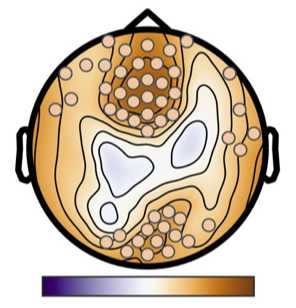
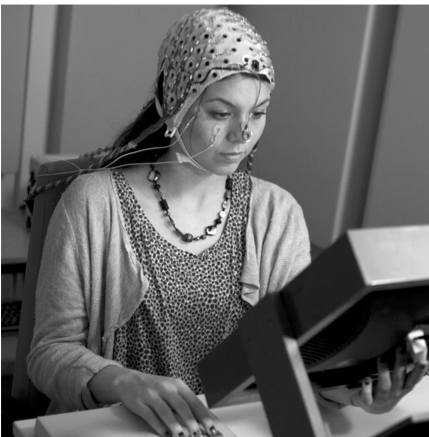
EEG recording
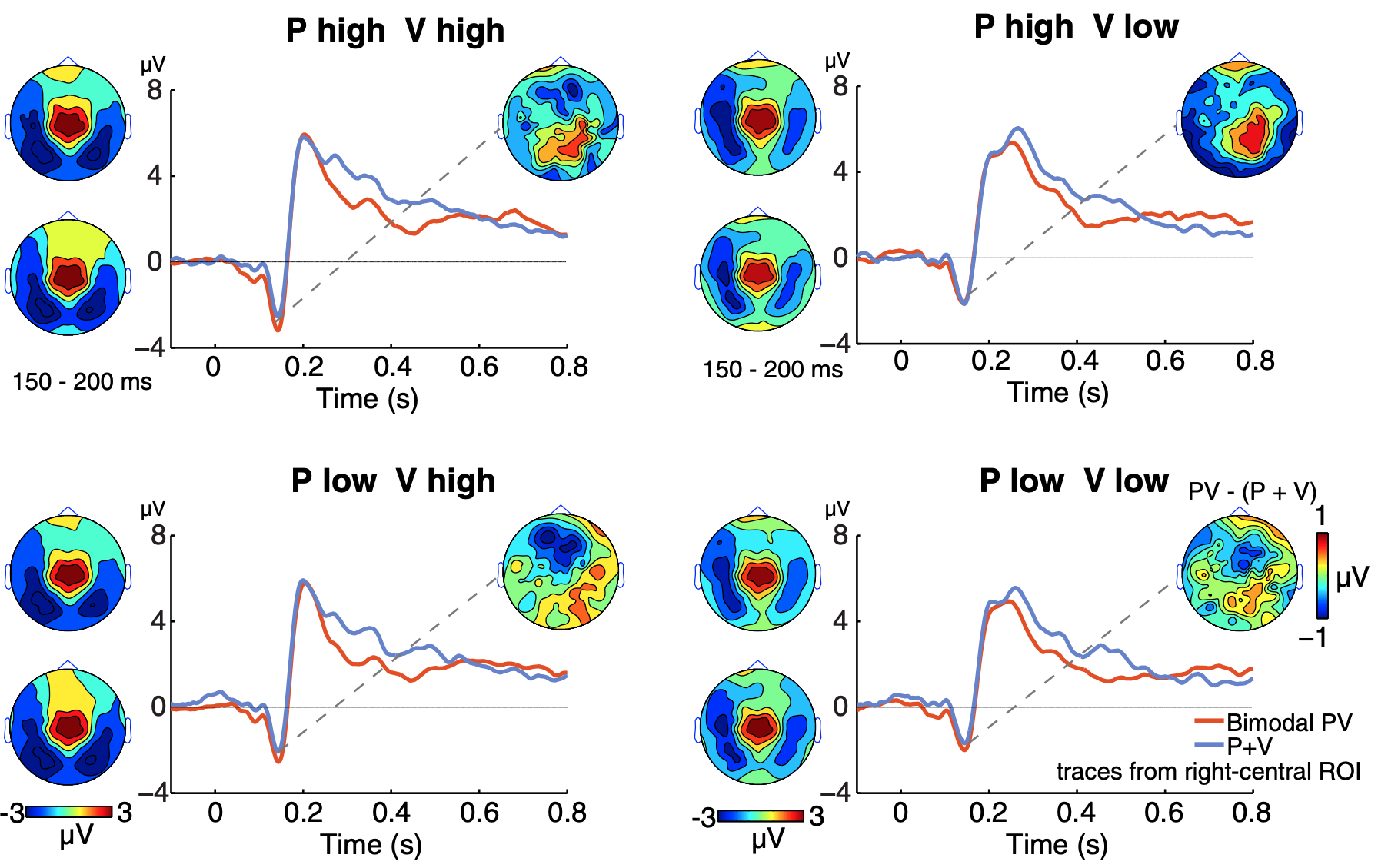
EEG recording during a multisensory attention task Pomper et al., 2015, HBM
Gamma oscillations
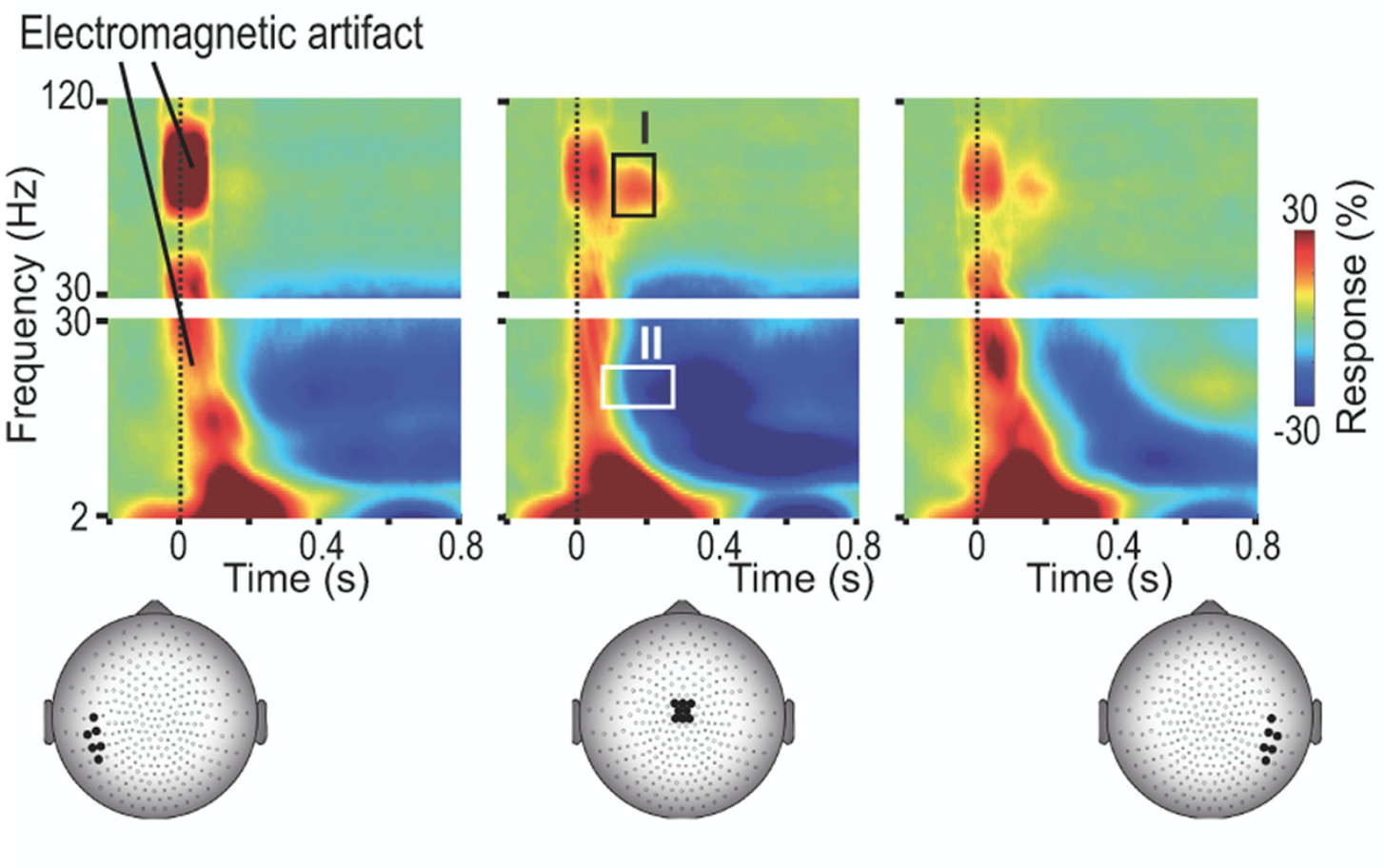
Gamma oscillations during visuotactile motion processing Krebber et al., 2015, Neuroimage
Working memory
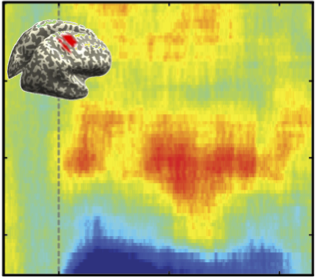
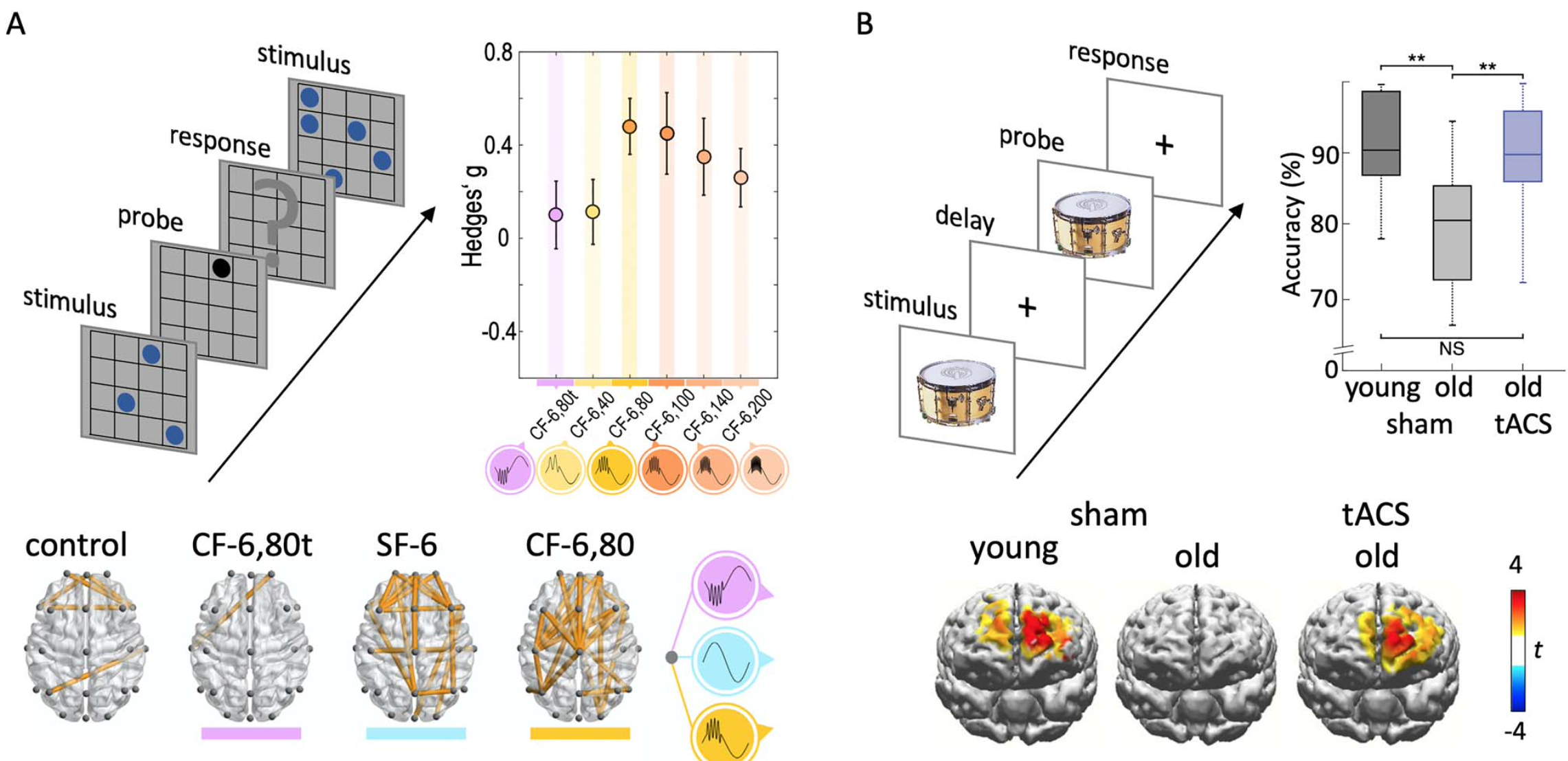
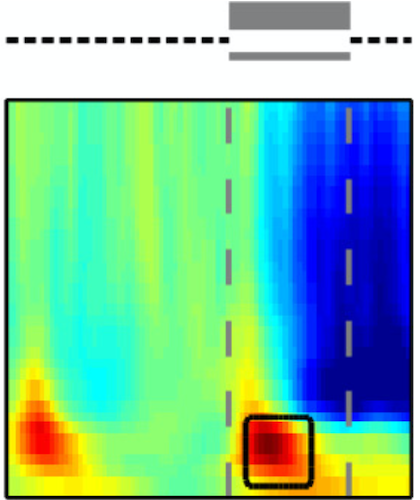
Working memory load enhances theta power in a multisensory paradigm Michail et al., 2021, J Neurosci

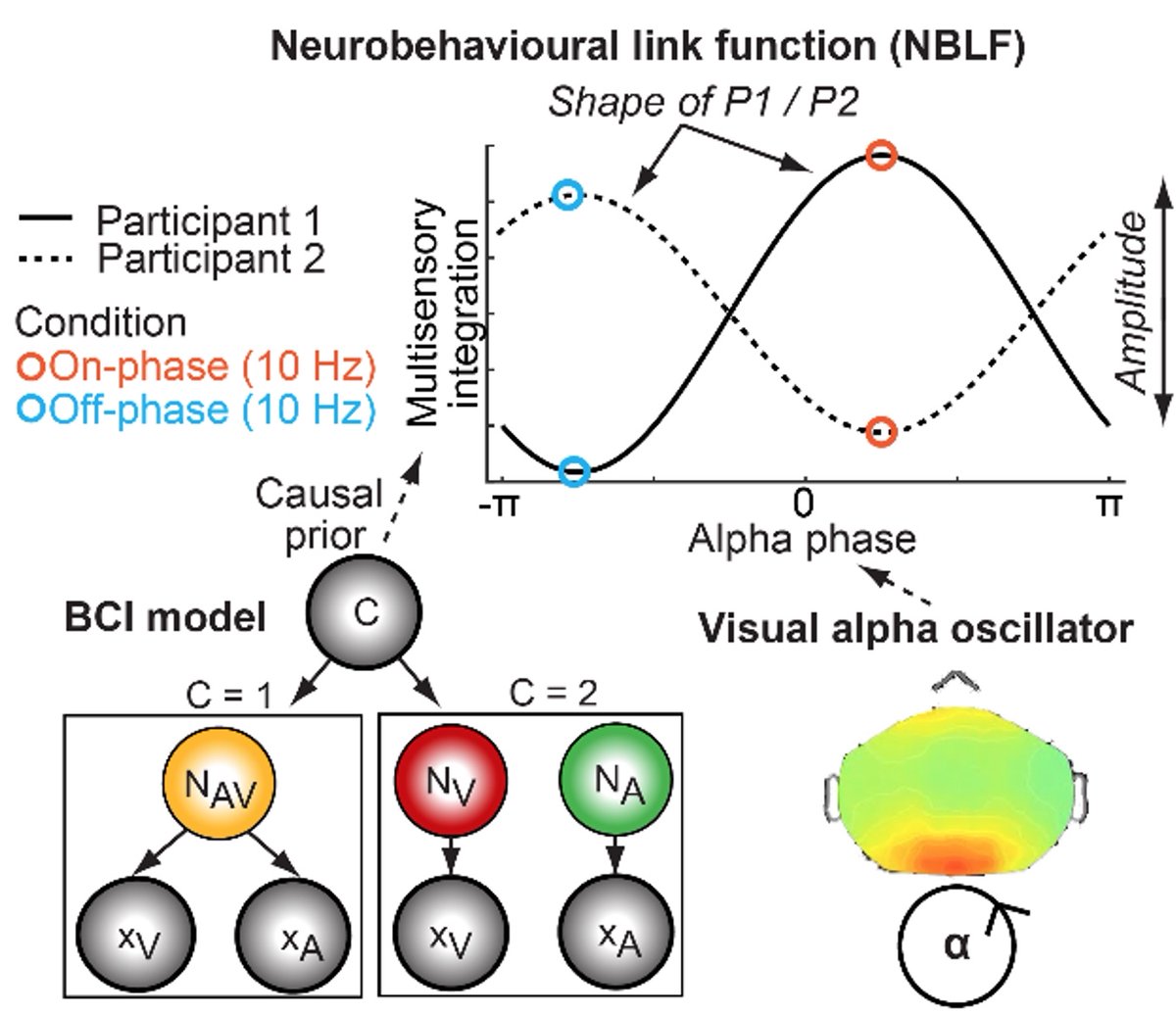
To navigate the world, the brain must assemble diverse environmental stimuli into a coherent picture. This requires fast and flexible communication between brain regions and across timescales (Senkowski & Engel, 2024). Critically, multisensory interactions occur with remarkably short latencies (Senkowski et al., 2011), suggesting they represent a fundamental brain property. These interactions are closely linked to attentional mechanisms (Talsma et al., 2010), highlighting the intimate relationship between bottom-up multisensory integration and top-down control. Building on this foundation, we have recently begun applying computational modeling to explain how the brain determines which environmental stimuli belong together and integrates this information over time (Gökberk et al., Preprint; Rohe & Senkowski, Preprint).

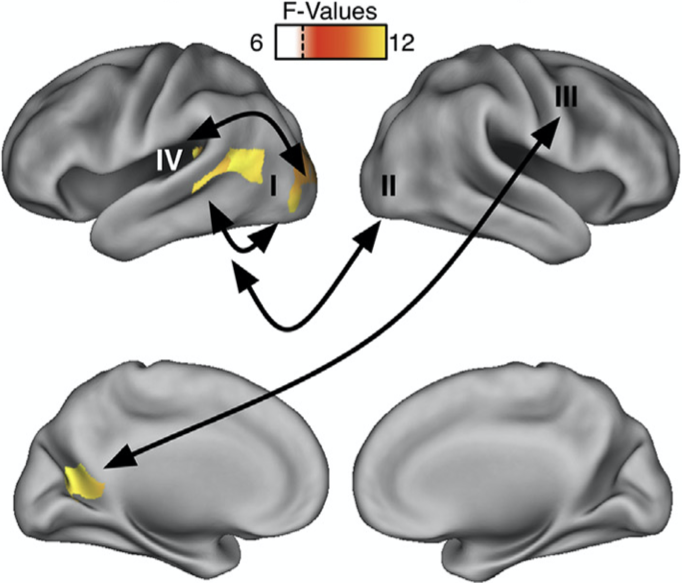
Keil2016cortex
Intersensory attention modulates functional connectivity Keil et al., 2016, Cortex
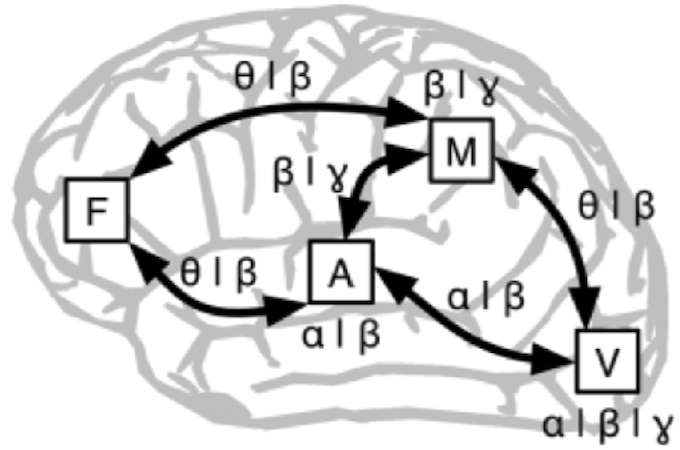
network_model_research
Role of neural oscillations for multisensory processing and attention Keil & Senkowski, 2018, Neuroscientist
Balz2015
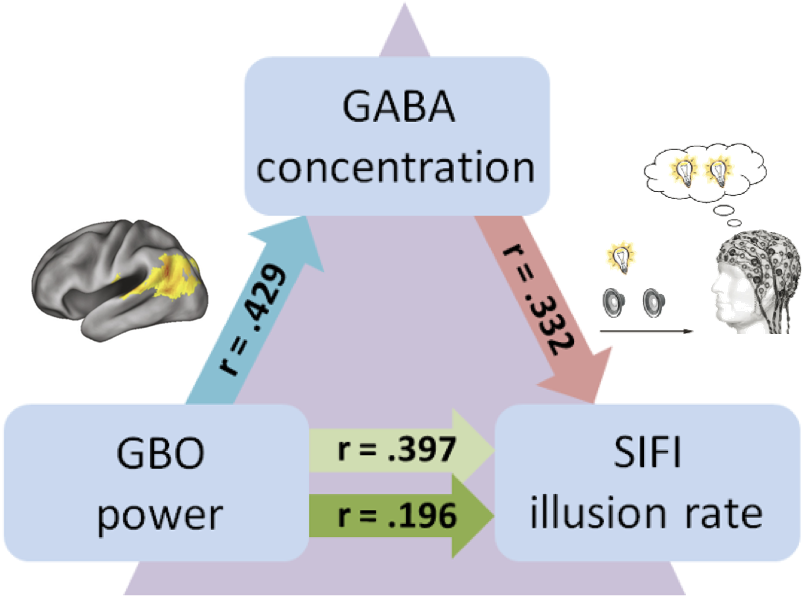
GABA concentration mediates the relationship between gamma and multisensory illusion rates Balz et al., 2016, Neuroimage
Schizophrenia

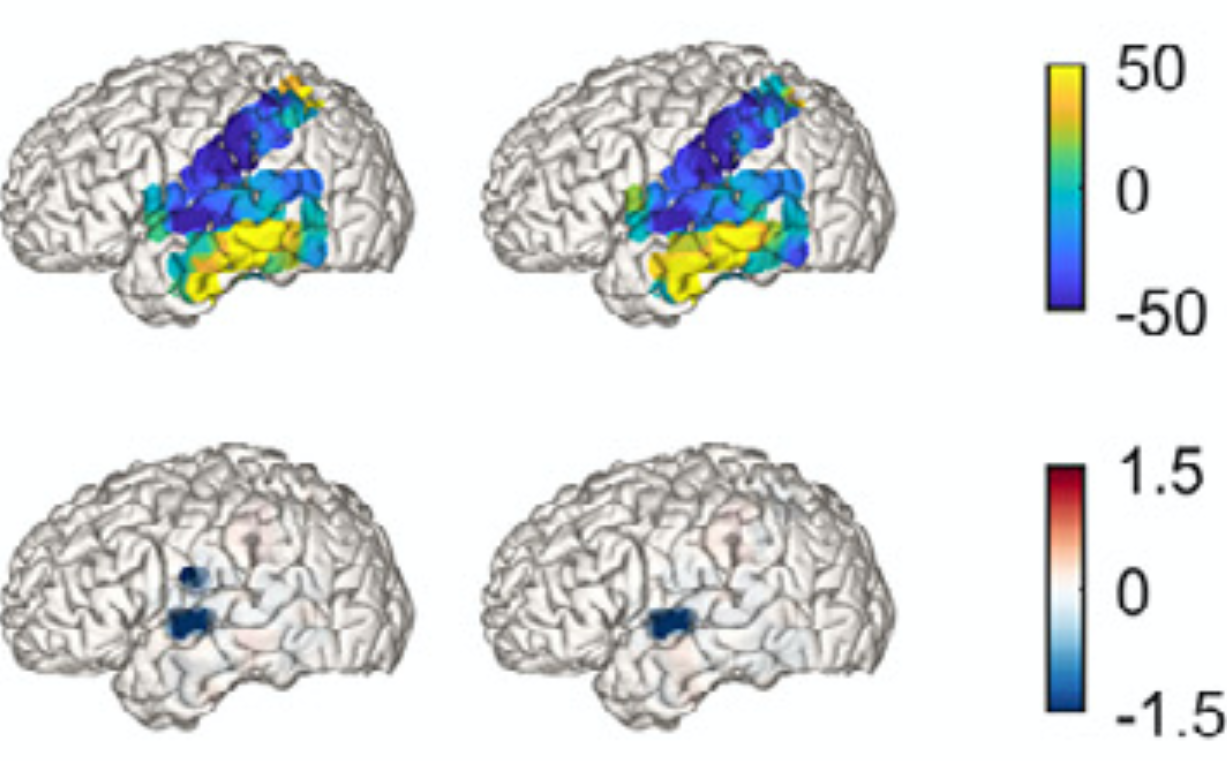
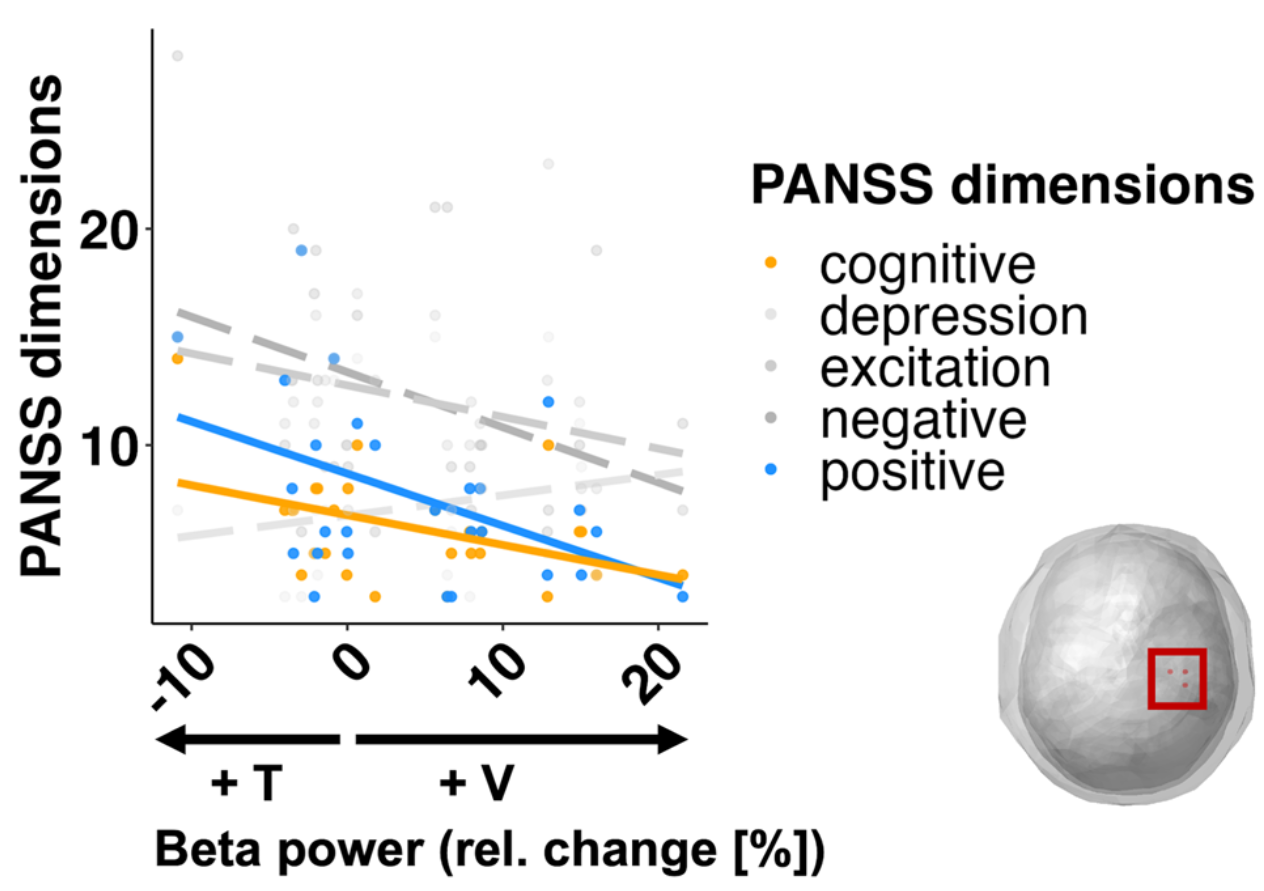
Numerous studies, including our own (Keil et al., 2016; Moran et al., 2019), have suggested that alterations in neural oscillations contribute to the psychopathology of schizophrenia. While the disorder is characterized by florid and debilitating symptoms such as hallucinations and depression, more subtle perceptual distortions and cognitive deficits also emerge. In several studies, we investigated multisensory processing in patients and, surprisingly, found only minor deficits (Balz et al., 2016; Senkowski and Moran, 2022). In contrast, we observed that largely intact multisensory processing can compensate for attentional deficits in schizophrenia (Moran et al., 2021; Moran & Senkowski, 2025). In further studies, we are investigating whether working memory impairments in schizophrenia are generalizable or distinct across different subfunctions of working memory using multivariate pattern analysis and machine learning.

speechnoise_SZ
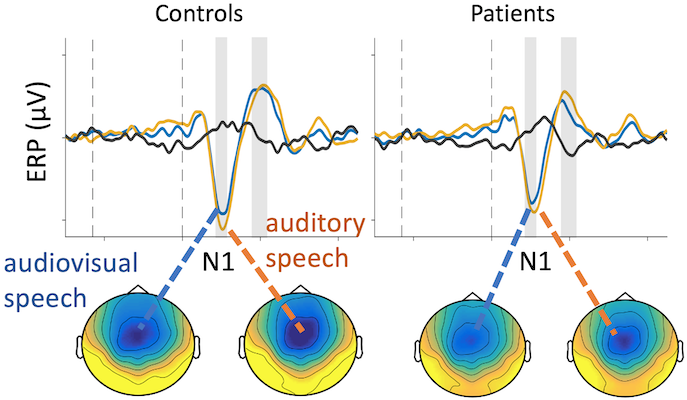
Patients with schizophrenia show an intact audiovisual N1 suppression effect Senkowski and Moran, 2022, Neuroimage:Clin
multiattention_SZ
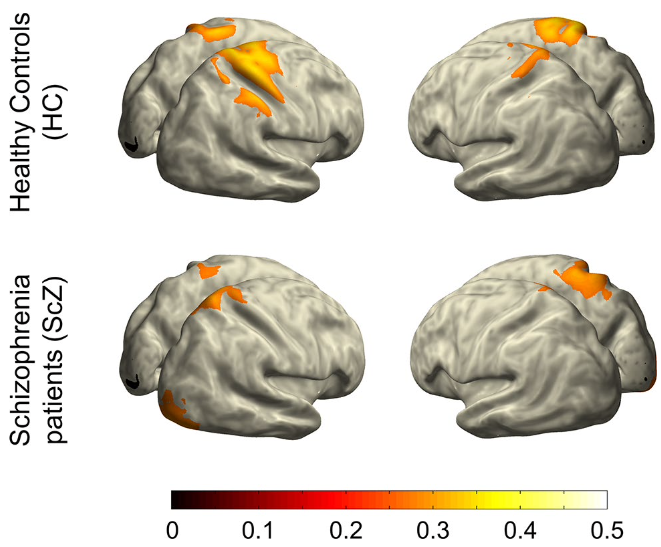
Multisensory processes can compensate for attention deficits in schizophrenia Moran et al., 2021, Cerebral Cortex
Pain

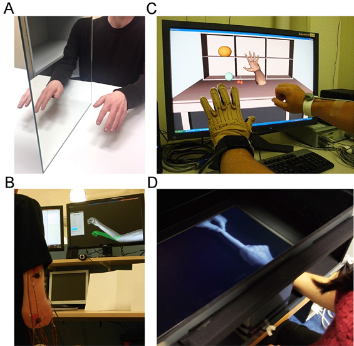
Our studies have primarily examined the processing of acute pain (Senkowski et al., 2011; Pomper et al., 2013). Noxious stimuli in our environment are often accompanied by input from other sensory modalities that can affect the processing of these stimuli and the perception of pain. Stimuli from these other modalities may distract us from pain and reduce its perceived strength. Alternatively, they can enhance the saliency of the painful input, leading to an increased pain experience. A main outcome of our research is that stimuli from other modalities interact with pain, so that they either elevate or diminish the processing and perception of pain (Hofle et al, 2012, 2013). We also hypothesized that chronic pain can distort body representation in the brain (Senkowski et al., 2016), which has implications for developing virtual reality feedback interventions for chronic pain treatment.
scientific_american
Looking at a needle during an injection increases pain Hofle et al. 2012, Pain
Pain_circuits
Visual input shapes pain-related networks Senkowski et al., 2014, TICS
pain_ejn
Alpha-band modulation in anticipation of a needle prick Hofle et al., 2013, Eur J Neurosci
Other topics

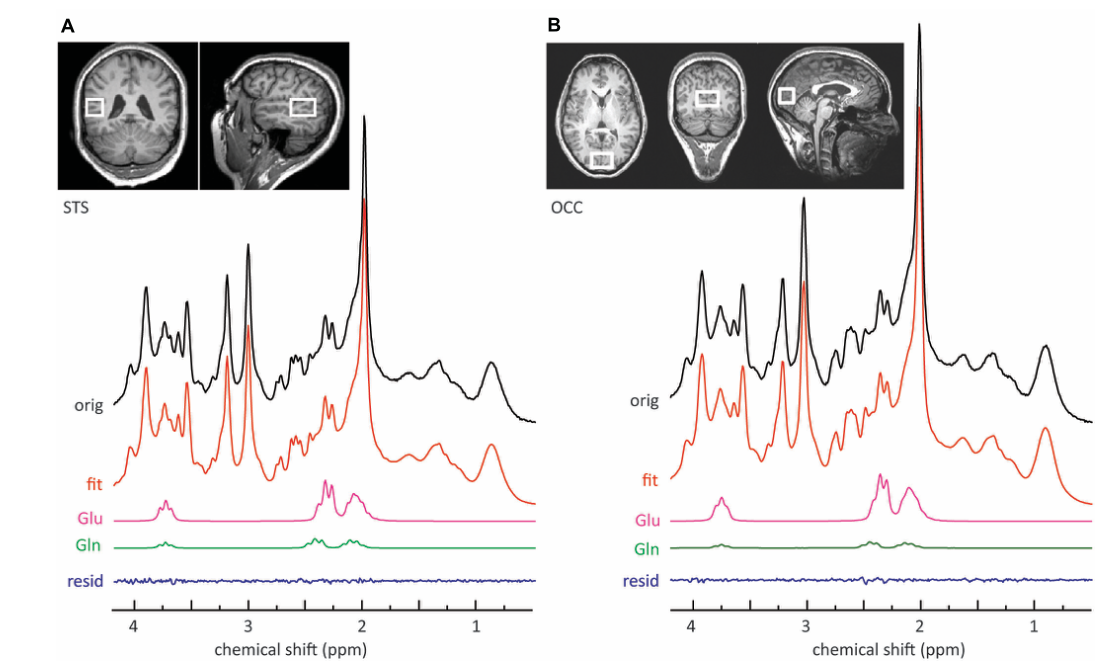
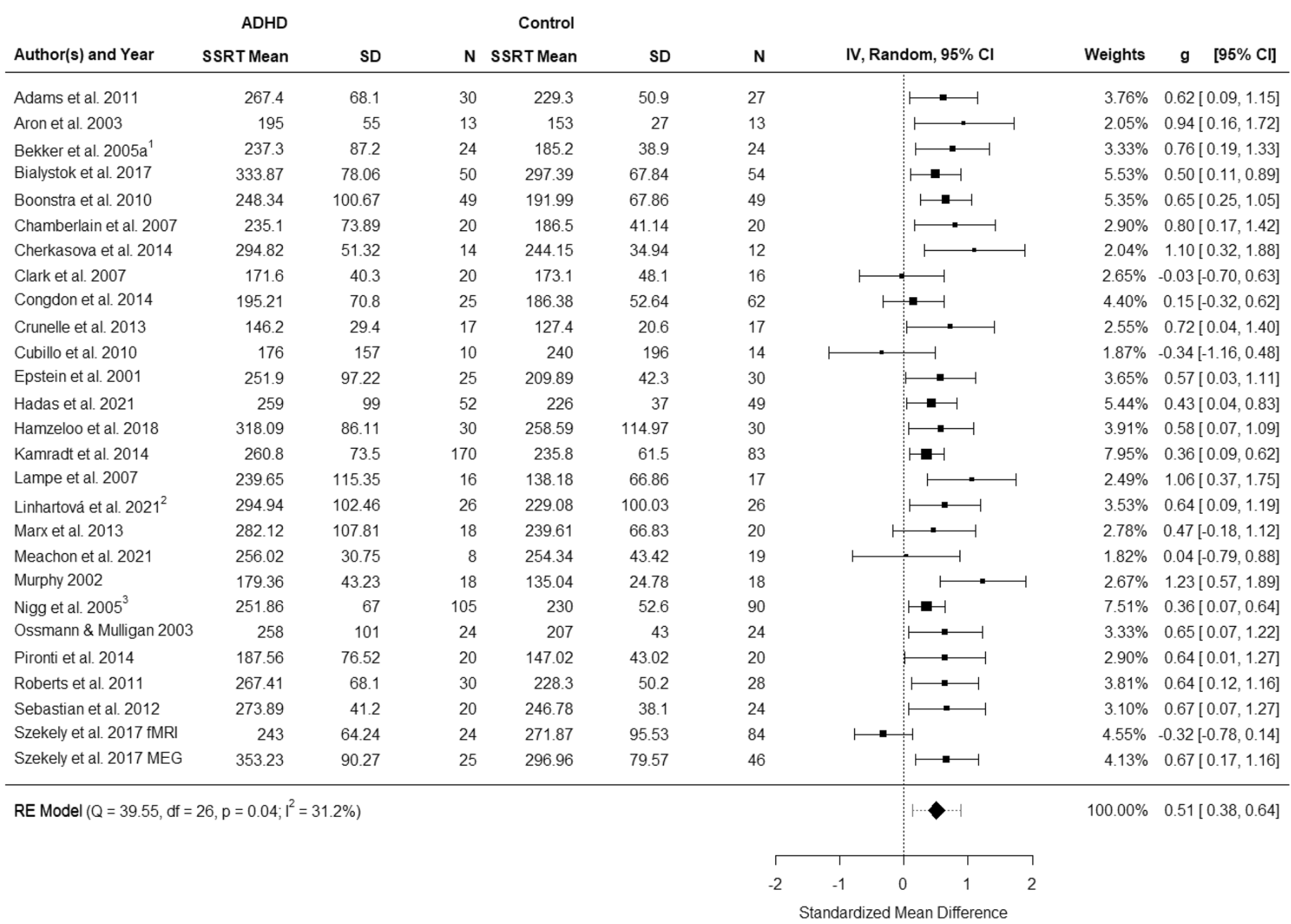
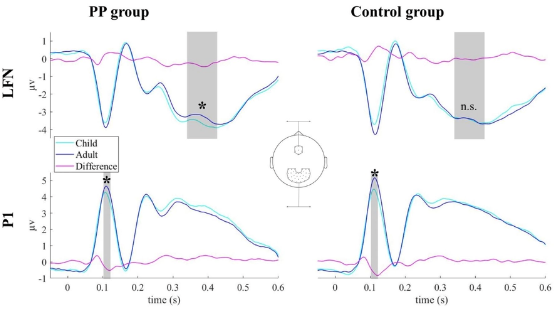
We have conducted smaller projects on other topics, including adult ADHD (Senkowski et al., 2023), generalized anxiety disorder (Senkowski et al., 2003), a collaborative project with the Institute of Sexology and Sexual Medicine (Speer et al., 2020), cochlear implant users (Senkowski et al., 2014), genetic research (Gallinat et al., 2003), functional magnetic resonance spectroscopy (Balz et al, 2018), and health service research (Moran et al., 2021). More recently, we initiated a DFG-funded project on memory processing in post-traumatic stress disorder. This project aims to apply established knowledge of the dynamic neural processes underlying memory to its potential dysfunction in people with PTSD. Memory dysfunction is a prominent feature of PTSD – people’s memories of traumatic experiences are often confused and overlapping, exacerbating the individual’s distress. It appears that general working memory and episodic memory performance, even for non-traumatic memories, are impaired in PTSD. We want to test whether these memory deficits can be related to oscillatory features of memory encoding and retrieval, and whether manipulating these signals can actually affect memory performance.

HBM_research
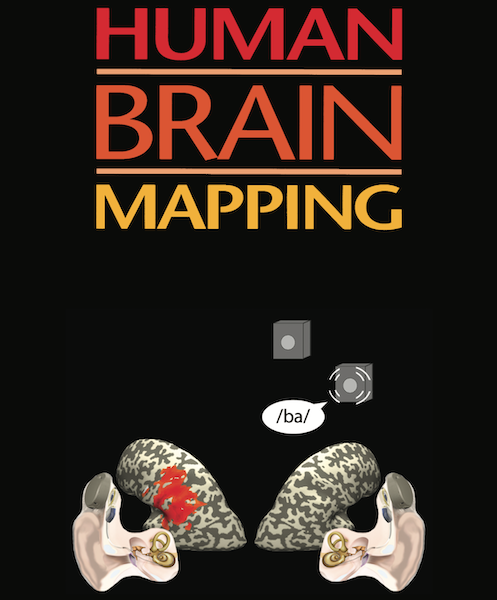
Auditory processing in cochlear implant users Senkowski et al. 2014, HBM
delta_continuity_illusion
Delta modulation during the auditory continuity illusion Kaiser et al., 2018, Eur J Neurosci
Kanizsa_figure
Studying neural processing of illusory Kanizsa figures Senkowski et al., 2005, Neuropsychologia